Tuesday, May 31, 2011

Spring Spirits Tasting


clip_image002

Every Spring, my favorite liquor store – Union Square Wines & Spirits – conducts a tasting of a vast array of spirits. This is one of the tastings I look forward to each year because in some cases, it introduces me to spirits I’ve never heard of before, or, in other cases, spirits I’ve heard of but have never as yet had an opportunity to try. In this blog post, I’m going to share with you some of the spirits I tasted which stood out to me this year.

Avion Tequila

If you’re a fan of the HBO TV show “Entourage” as I am, then you’re certainly familiar with Avion Tequila. They served a Blanco, Reposado and Anejo, all of which were 80 proof – and of course, from Jalisco, Mexico. According to the company representative, their tequila takes much longer to make than most others due to the fact that they use their own proprietary filtration process called “ultra slow filtration”. The unaged Blanco had a sharp bite on its finish. The Reposado is aged in oak barrels for anywhere from two to eight months and had a delightful smoothness to its taste. Their Anejo was aged two years in white oak barrels, formerly used to hold Jack Daniels whiskey – which is quite clear when you sample it as it’s got a particular smokiness to both its nose and taste.

clip_image004

Bache-Gabrielsen Cognac

Bache-Gabrielsen was not a Cognac I was familiar with, but I was immensely grateful for the introduction. They served us three offerings of 80 proof Cognac, including a V.S.O.P. and an X.O – each of which came from different regions and used different grapes. I started with what is called Three Kors, which had a fascinating background. The term Three Kors means Three Crosses; it is derived from a time when Norway had its prohibition period; at that time, spirits could only be sold by prescription in pharmacies – pharmacies, were identified by a sign which bore three crosses … hence the name. The V.S.O.P. had a bit of a spicier taste to it while the X.O. contained high acidity and had a considerably longer finish.

Michel Couvreur Scotch

While I might characterize myself as something of a Scotch aficionado, I would never be so presumptuous as to say I am an expert by any means. And so it was that I was introduced to yet another spirit new to me – Michel Couvreur Scotch. Their 12 year aged Malt Scotch is 86 proof and possesses a distinctive sweet smell, with a gentle taste that’s not especially overwhelming. The company representative described it as “rounder and more sophisticated”. Additionally, they served something called a Pale Single-Single that was 90 proof. Unfamiliar with the term “single-single”, I learned that this referred to the fact that the scotch was single malt and aged in a single barrel. This one had a more familiar Scotch feel to it as it had more burn on the back of the tongue, contributing to a long finish.

Have you ever tried any of these spirits? If so, please post a comment and share your experience with us.

clip_image007

Sunday, May 22, 2011

“Beautiful Boy” – Movie Review


This weekend, my movie class showed its final bonus screening of the Spring Semester, a drama titled, “Beautiful Boy”, starring Maria Bello and Michael Sheen.


Synopsis

A couple struggling with their marriage try to stay together for the sake of their teenage son – but when they learn that he’s been involved in a shooting at his college, will they be able to remain married?


Story

Bill & Kate (Sheen & Bello) are on the verge of divorce – the only thing keeping them from pulling the trigger is their beloved son Sam, a teenager struggling through his freshman year of college.  The couple’s only child, he is the sole focus of their attention when not directed at professional matters.  A shy, sullen young man, Sam seems disturbed in a complicated way that neither parent is able to easily detect in their communications with the boy.  Nevertheless, it comes as a shock to them when they learn that he has died in a shooting at his college – and even further disturbing when they are told that Sam was the one who conducted a massacre of students and faculty before taking his own life. 


Besieged by the media in search of the hottest new story, Bill & Kate flee their home to stay with her brother and his wife while they sort things out.  Ultimately, however, Bill & Kate begin to see that their presence is causing a strain in that couple’s marriage, too, so they leave in order to stay in a motel.  While alone, their focus turns to not only their son, but to the tragedy that he has wrought; each blames the other for the bad parenting that caused this situation, yet they also insist that they are free from complicity in the events that led up to this slaughter. 


Despite some bad memories, they are financially bound to return home – too many debts and creditors chasing them to be able to wallow in self pity for too long.  Finally, they are able to come to terms with the carnage and are able to go back to the house where they spent many years.  But once in their home, can they somehow manage to repair their marriage and return life to some semblance of normalcy? 


Review

Obviously, this is a difficult movie to watch – but not just for the reasons that seem to be immediately evident based on its subject matter.  There are technical reasons, as well.  For one thing, “Beautiful Boy” is shot in a very dark way, possibly the director’s choice to match its mood; as a result, the viewer must strain to see some of the scenes.  Also, the ending of the movie is a bit vague, which causes us to wonder what we are supposed to believe about this couple.  Perhaps the director didn’t quite know the story he wanted to tell or intentionally left the ending open to interpretation – in either case, it feels much like the work of an immature filmmaker. 

While the story is powerful and the performances by the actors match this compelling drama note for note, there are moments when the viewer drops out of the movie at various points.  Will the parents ever regain their sanity or are they forever destined to live in a state of high anxiety?  For much of the movie, we are forced to watch the couple react – or overreact – in a manner that seems unlikely and unbecoming.  Clearly, the actors chose these roles based on the portions of the script where they are allowed to exhibit their talents to their best display – which is fine, but the questions that are posed about such a tragic event are perhaps best left to be handled by a more experienced director. 

The instructor gave a little bit of background about this movie prior to the screening.  Director Shawn Ku – who also collaborated on the screenplay – was inspired to do this movie based on a tragedy in his personal life.  This is fine, but in order to tell a story such as this one, you must know where you want to wind up at the end, which, as I said earlier, is part of the problem with the film – it’s not quite sure exactly what it is that it wants to say about such an incident.  One of the more powerful scenes in this movie is the confrontation between the two parents when they are confined to a motel room; unfortunately, this is undercut by use of a handheld camera which seems to be intended to enhance the chaos, but instead, makes the scene almost visually painful to watch.  Fans of the singer Meatloaf should know that he plays a small role as the manager of a motel at which the couple stays. 


Thursday, May 19, 2011

“The Perfect Host” – Movie Review


The Spring Semester of my movie class concluded this week with a screening of the psychological thriller, “The Perfect Host”, starring David Hyde Pierce. 


Synopsis

After a bank robber scams his way into a man’s home to hide out, he tries to take advantage of him – but when the tables are turned, who will be the real victim?


Story

Injured during a bank heist, Taylor prowls an upper middle class neighborhood in a Los Angeles suburb looking to fool some unsuspecting rube so he can lay low for a little while and collect himself.  Looking to evade the police and eventually meet up with his girlfriend, Taylor happens upon Warwick’s (Pierce) house while he is in the midst of preparing for a dinner party.  Convincing Warwick that he’s an acquaintance of a mutual friend currently out of town, Taylor is permitted entrance to his home on the ruse that he has met with misfortune on his return trip. 

Suspicious of Taylor’s story, Warwick questions him about various details, resulting in friction between the two men.  Warwick decides to defuse the situation by inviting Taylor to stay for his dinner party – but when a news report about the robbery is announced on the radio, Taylor admits that he’s the one the police are after and then threatens Warwick’s life, forcing him to cancel his dinner party.  Soon, however, Taylor comes to the realization that Warwick has drugged him and that now it’s he who has become Warwick’s hostage, causing Taylor to fear for his safety. 

After being threatened with torture and possible death, Taylor somehow manages to escape from Warwick’s house – but has he escaped from his captor?  Warwick won’t allow Taylor the opportunity to get away scot-free.  Instead, he decides to put the squeeze on Taylor, coercing him in return for his freedom.  But will Taylor surrender to Warwick’s demands?  And will the police somehow manage to uncover the evil plot that both have hatched and executed?


Review


For David Hyde Pierce – Niles from the hit TV sitcom “Frasier” and star of many Broadway plays, including Monty Python’s “Spamalot” – his performance in the movie “The Perfect Host” can undoubtedly be characterized as a tour de force.  Appearing in almost every scene of the film, his vast acting talents are put on great display for all.  While much of this dark film is quite funny in its own twisted way, however, it is not without its own caveats – there are many contrivances and actions by its characters that force the viewer to suspend disbelief to the point that it feels as if that disbelief may in fact be a two-ton weight hovering precariously overhead, ready to drop. 

If you do choose to see this movie, make no mistake that it should be to watch Pierce’s portrayal of a psychopath the likes of which has rarely been captured on film.  Despite its shortcomings, “The Perfect Host” remains quite clever in terms of its many twists and turns – just don’t go into it with the expectation that you’re going to see something akin to the genius of Hitchcock.  In my movie reviews, I assiduously avoid including spoilers, despite the temptation; please believe me when I tell you that this is one of the more difficult reviews I’ve had to write in a long time because it is so ripe for spoilers.  You’ll just have to see the movie for yourself in order to appreciate that.  By the way, an actor by the name of Clayne Crawford plays Taylor and you’d swear he was a dead ringer for Ray Liotta.  And will you be able to recognize the cameo appearance by the 1970’s singing sensation Helen Reddy?

Following the screening, our instructor interviewed the star of the film, David Hyde Pierce.  Pierce spoke at great length about his background, saying that he started out studying at Yale with the hope of someday being a musician; however, after taking an acting class, the teacher and the experience inspired him to take his life in a different direction.  While he has had great success in television, Pierce claims that his love of working on the stage prevents him from wanting to return to starring in a regular TV series at any time in the near future – although he clearly refused to rule it out altogether. 


Saturday, May 14, 2011

The Gift Of The Agave


clip_image001

Recently, I attended a tasting during the week of Cinco de Mayo where agave-based spirits were featured – these of course included both tequila and mezcal. The tasting featured eight types of mezcals from two different manufacturers and a total of ten types of tequila from three manufacturers. Try as I might, I was unable to taste every single one due to a shortage of both time and sobriety. As a result, this review will focus on sharing with you some of the ones I thought were among the best. These will include two mezcals from different manufacturers and several offerings from one tequila manufacturer.


Fidencio

Fidencio Joven Mezcal was the first mezcal I tasted on this day. An 80 proof spirit from Oaxaca, Mexico (as were all the mezcals), this is somewhat less smoky than a typical mezcal because of the difference in its preparation. While mezcal production is typically made by roasting the agave with mesquite, Fidencio instead uses radiant steam heat to cook the agave plant without the inclusion of mesquite. The result is a less intense and more accessible mezcal which might be a good choice for someone to try as an introduction to the spirit. We tried it in a cocktail called The Mule Variations, which had the following recipe:

  • 2 oz. Fidencio Mezcal Sin Humo
  • ½ oz. fresh squeezed lemon juice
  • 2 dashes Peychaud’s Bitters
  • Topper of Ginger Beer

Combine all of the above ingredients (except for the ginger beer) in a mixing glass with ice, then shake to chill. Strain into a rocks glass with fresh ice, then top it off with the ginger beer. If you prefer a sweeter taste to the cocktail, then substitute the ginger beer with ginger ale; this was used in the version of the cocktail we tried because they couldn’t find any ginger beer.


Del Maguey

Next up was Del Maguey, arguably the best mezcal – and they’ve won enough awards at various spirits championships over the years that they could probably take that argument handily. They presented seven different types of mezcals to the tasting, ranging from 80 proof to a whopping 98 proof. Despite the fact that I wanted to sample them all because of their reputation, I restrained myself to only a couple in order to remain vertical for the remainder of the day. Without a doubt, these are all very much sipping mezcals (the company strongly recommends you do not use them as shots), however, their first one – the 84 proof Del Maguey Mezcal Vida – is the type they say could best be used for mixing cocktails because it doesn’t have a taste that will overwhelm the drink.

My own personal favorite, however, was the Del Maguey Chichicapa Single Village Mezcal. At 92 proof, this one immediately caught my attention because the company representative described it to me as The Laphroaig of Mezcals. Seeing as how Laphroaig is my favorite scotch, I had to give it a try and I was far from disappointed. Although served in small clay cups for the tasting, you’d easily want to sip this from a nosing glass because of its fragrant aroma. Its strong smoky taste is particularly apparent on the finish. I highly recommend this one.


agave_menu1

Siete Leguas

If you are a fan of Patron, I can almost guarantee you that you will immediately switch to Siete Leguas once you have given it a try. It is so flavorful that you might almost consider Patron to be bland after you’ve tasted Siete Leguas. For those of you who may be unfamiliar with this particular tequila, please allow me to share with you a rather colorful story about its background – which will help to clarify exactly why I made the Patron comparison at the outset.

Let’s begin with the name: Siete Leguas means “Seven Leagues”. The reason why it is called Siete Leguas is because that was said to be the name of Pancho Villa’s horse; Villa supposedly named the horse Siete Leguas because it ran an impressive 21 miles (7 leagues) during a conquest. Siete Leguas has earned the nickname of “The Original Patron” because for many years, they made the tequila that was sold by Patron in the United States; they did that because Siete Leguas was not sold here and Patron wanted to market themselves in this country. Over 20 years ago, the two companies had a falling out which resulted in Siete Leguas no longer providing the tequila for Patron – but now that Siete Leguas is sold here in America, they are in direct competition with Patron.

The distributor let us sample the blanco, resposado and añejo, all of which were 80 proof. The cocktail that was mixed with the reposado tequila was something called The Natural Margarita because of its ingredients:


  • ½ oz. of agave nectar
  • ¾ oz. water
  • 2 oz. Siete Leguas Reposado Tequila
  • 1 fresh lime juice
  • 1 oz. Gran Gala

The last ingredient, Gran Gala, is an orange flavored liqueur similar to Grand Marnier. All of the above are shaken then strained into the glass (with or without ice, depending on your preference). In trying this version, we found that the other ingredients somewhat masked the flavor of the tequila, so the recipe was changed to instead use 3 oz. of the tequila, which made the cocktail both better and stronger.


Have you tried any of these? If so, please leave a comment and let us know what your experience was like.


agave_menu2

Friday, May 13, 2011

“The First Grader” – Movie Review


This week in my movie class, we saw the drama “The First Graderstarring Naomie Harris.


Synopsis

After the Kenyan government promises its citizens a free education for all, an 84 year old man applies to be a student in an elementary school – but when his attendance causes controversy, both his future education and his teacher’s job are in jeopardy.

Story

In the years after the Kenyan revolt against British colonialism during the 1950’s, the life of almost every citizen of that country changed – mostly for the better. One of the benefits that resulted from gaining their independence was the fact that the government provided free education to all citizens. When this became available, parents bombarded the few tiny schoolhouses nearest their village to enroll their children in grade school – but there was one student that no one expected. His name was Maruge, an 84 year old veteran of the Kenyan uprising who has been functionally illiterate his entire life.

After multiple rejections, Jane (Harris) – the teacher at the school – finally decides to accept Maruge as a student, in part due to his determination to learn. With Maruge enrolled, he begins to soak up each new lesson like a sponge and quickly becomes one of the best students in the class, even offering to help some of the other children who are slower to learn. Soon, he makes friends with many of the students, who are young enough to be his grandchildren, if not great-grandchildren. But Maruge’s enrollment comes at a cost – his presence causes both controversy and notoriety when the media learn of his existence and descend upon the school to cover this story. Many parents resent Maruge being there because they feel that their child is being slighted due to the shortage of resources at the school.

Following a review of the situation by the Board of Education, it is decided that Maruge can no longer be a student at the school. Disappointed that his education is terminated, Jane decides to circumvent the matter by making Maruge an unpaid assistant, to whom she will provide special one-on-one lessons at the end of the school day once the children have all gone. But once the administration learns of this, their response is to not only expel Maruge but also, to transfer Jane to another school far away. Traveling into the city, Maruge crashes a meeting with the administrators to plead his case – but will he succeed in being reinstated as a student at the school as well as get Jane returned to teaching there?

Review

This movie is based on a true story, which, at its essence, is very inspiring and serves as proof of both the appreciation and value of an education. Having said that, however, it’s also certainly not for everyone – as evinced by the fact that there were several students who walked out of the screening. Most likely, this is due to the violence – the story of Maruge and the history of the revolution of which he was an essential part is told at various points throughout the film in a serious of flashbacks. While you don’t see gore in certain of the scenes, the violence is implied; some scenes include brutal execution of women and children and bloodshed as the result of torture when Kenyan prisoners are whipped at the hands of British soldiers. Even some of the students that did not walk out wound up averting their eyes at these scenes, so take that caveat for whatever you feel it may be worth.

Although ultimately an uplifting tale, I had some problems with the way in which the story was told. For one thing, certain things were handled in a rather heavy-handed manner; this would include, but definitely not be limited to, the violence; as much as certain characters may be beaten, we, as an audience, also feel beaten over the head with returns to such scenes. While it’s understandable that the filmmaker’s intention is to get the audience to appreciate the extent of the suffering Kenyans faced during this time, eventually, you just want to respond by saying, “OK, we get it, let’s move on now, shall we?” Another issue for me was the fact that the main character who was supposed to be the focus of the story seemed to turn a bit at the end of the second act. To me, it seemed to change from being Maruge’s story to being Jane’s story. This made for a slight feeling of imbalance, but one that you may be ultimately able to correct, depending on how much you buy into the film in the first place.

After the screening, the instructor interviewed one of the film’s producers as well as one of its stars, Naomie Harris. The producer said that he had originally gotten the idea for the movie when he read an article about Maruge; he then set out to purchase the rights to Maruge’s story and after a few weeks, was all set to start working on the movie. Originally, the producer said he wanted Morgan Freeman to play the part of Maruge, but Freeman turned down the role because he felt that it should be played by a lesser known actor. The producer then sought out Sidney Poitier, who declined because he refused to come out of retirement. Eventually, they wound up hiring a retired TV newscaster local to the area. Harris said that she felt comfortable with this role because her father was a teacher and she grew up in that environment. She said that he was of great assistance to her during the shooting of the movie when she found that some of the children were not responding to her; he then gave her some advice, at which point they started to come out of their shell a bit.


Sunday, May 08, 2011

“How To Live Forever” – Movie Review


This weekend, my movie class had a bonus screening of the documentary “How To Live Forever” by Mark Wexler. 


Synopsis

A documentarian turns his camera on longevity, asking elderly people how they managed to live so long and posing the question how long do we want to live?


Story

Documentary filmmaker Mark Wexler was inspired to make this film several years ago when he received his AARP card in the mail shortly before his 50th birthday.  A watershed moment for him, this basically stopped him in his tracks because it forced him to come to the realization that not only was he aging, but also, he had to confront his own mortality.  It was with this in mind that he wondered about exactly how long he wanted to live.  Did he want to live forever?  What does it take to live a long life?  Could he thwart his own genetics to live to be over 100? 

Opening at a mortician’s convention in – of all places! – Las Vegas, we see the many technological advances that have been introduced to the profession for how to best deal with death.  This then immediately raises the question about when should death be expected?  We’ve seen people die in their 70’s or 80’s and believe that they may have lived a long, full life, but is that really something which we should consider a long life?  What is called into question here is the aspect of longevity – what is it and how to reach it?  Certainly, we like to think that we know this, but are the so-called “Baby Boomers” ready to go softly into that good night? 

Wexler winds up traveling not only throughout the United States, but around the world as well.  In his travels, he finds that Okinawa, Japan has many residents in their 90’s and even over 100 years of age – as a matter of fact, one of these women proposes to him!  What makes these people live so long?  Well, for one thing, it’s certainly their low-calorie diet, but for another, it’s their level of activity – not merely physical exercise, but also, mental activity as well.  These people have something to live for, something that makes them want to wake up and get out of bed in the morning – they are mentally, spiritually and physically fully engaged in their own life.  Among the people he meets is a 75 year old Japanese porn star!  In England, he meets Buster – a man who believes that a steady job leads to a stead life.  Buster, like some of the people Wexler meets, drinks, smokes and does other things that contradict his so-called “healthy” life – yet, they have lived for many years.  Is Wexler’s traditional concept of a healthy lifestyle wrong or are these people merely some kind of mutants?  


Review

Mark Wexler is the son of acclaimed Hollywood cinematographer Haskell Wexler.  Raised believing his father was a film icon, he made the documentary “Tell Them Who You Are” as a tribute to him.  Likewise, you could say that Mark Wexler made “How To Live Forever” to similarly pay tribute to his mother, an equally talented artist, whose paintings burned in a house fire years before her death – but in a strange way, contributed to her mental and emotional downfall which ultimately resulted in her death.  Was this what the filmmaker was trying to tell us?  Is intellectual engagement in life the most vital thing to living a long life?

While it might be so, Wexler’s documentary vacillates between actual documentary and sometimes mockumentary that it sometimes may be hard to tell whether or not it should be taken seriously.  Although the film is at times genuinely funny, it is also equally as sad because occasionally, some of the interviewees cannot quite grasp exactly what it is that has allowed them to live so long and – in some cases, at least – live so productively.  Periodically, Wexler turns the camera on himself in what appears to be comic attempts that sometimes succeed, but not consistently enough to merit calling this film a complete success. 

Both before and after the screening, Wexler was interviewed by the instructor.  Although personable, he is not humorous enough to cause genuine, spontaneous laughter in his discourse, which was a telltale downfall in his documentary.  At times, the film seems to want to take itself seriously by interviewing scientists, writers and physicians – yet it is somewhat schizophrenic in the sense that it also appears to wish to strike humorous tones, which results in its ultimate message to be somewhat muddled.  Wexler spoke about how his experience making this film caused him to make certain changes in his own life and also talked about some of the subjects in the film and how life after the shoot went for them. 


Saturday, April 30, 2011

“Last Night” – Movie Review


This week in my movie class, we saw a drama titled, “Last Night”, starring Keira Knightley, Sam Worthington and Eva Mendes. 


Synopsis

When a married couple are briefly separated during a business trip, will they remain faithful to each other?

Story

Upon returning home after a party attended mostly by business colleagues, Joanna (Knightley) wrongly accuses her husband Michael (Worthington) of cheating on her with Laura (Mendes), his sexy co-worker, who seems to be unusually attentive to him when the two are left alone for a moment.  A heated argument ensues where Michael vehemently denies any infidelity on his part, but Joanna has difficulty believing him.  With a short business trip to Philadelphia looming where he will be accompanied by Laura, Joanna is increasingly concerned about their marriage, but ultimately is convinced by Michael that nothing is going on between them.
 
While Michael is away, Joanna runs into Alex (Guillaume Canet), her ex-boyfriend visiting New York City from his home in France in order to meet with his publisher (Griffin Dunne).  With her husband out of town, Joanna decides to meet up with Alex for cocktails that night; over drinks, it appears that although Joanna is now married, neither she nor Alex have ever completely gotten over each other.  Their mutual attraction no longer deniable, it would seem that their romance is well on its way to being rekindled.  As the evening wears on, it’s beginning to look like Joanna will be the one to cheat on Michael. 
 
During his business trip, Michael winds up spending time alone with Laura and discovers that she is in fact attracted to him and, despite knowing that he’s happily married to Joanna, desires an affair with him.  Flirting with Michael at a bar, she then leads him back to the hotel where they are both staying during their excursion; she next tries to seduce him by suggesting that they both go skinny dipping in the indoor pool after hours.  With both spouses enticed by the opportunity for an illicit tryst, will they succumb to temptation or can they both somehow manage to keep their wedding vows? 

Review

This movie recently played to some acclaim here in New York City at The Tribeca Film Festival, which is now winding down.  One thing that is remarkable about “Last Night” – and this was pointed out by our instructor prior to the screening, but it certainly does become evident on watching the film – is that it was done by a woman who is a first-time director.  Usually, such “first-timer” films are a bit rough around the edges due to the filmmaker’s inexperience and – especially with an independent film – corners surely do seem to be cut in terms of technical quality.  But this was not the case with “Last Night”, which had the look and feel of a major studio release. 
 
In spite of this, however, I am unable to recommend the movie as something to rush out to see in theaters, but may be worth a download/rental or viewing when it hits cable TV.  The reason for this is due to the fact that I found the film to be somewhat plodding – an odd thing to say since the movie is only about an hour and a half long, but my justification for this is because the story seems to take a while to get going and even then, you’re not quite sure exactly where it’s headed.  Our instructor remarked that it almost had the feel that the script could’ve been a stage play and perhaps that’s the problem in a nutshell – it maintains something of a static feel to it without very much of the forward movement you expect from a film, but might be more prepared to experience with a play. 
 
Prior to the screening, our instructor interviewed Massy Tadjedin, the film’s writer/director.  A young woman with a fascinating background – she was born in Iran and her family moved to California when she was only two years old – she grew up in the American culture but speaks both English and Farsi fluently.  Following an Ivy League education, she has both written and sold several screenplays, but chose to have “Last Night” as her directorial debut.  Despite being a first time director, she apparently found no issues as far as working with the actors or making decisions about how and where to put the camera as she said that she specifically didn’t want to make an overuse of handheld cameras because she wanted to give the film an almost voyeuristic look and feel, where the viewer is nearly intruding or stumbling upon observing something intimate which was not intended for them to see. 
 

Tuesday, April 26, 2011

“Exporting Raymond” – Movie Review


This past weekend, my movie class had a bonus screening of the documentary Exporting Raymond, about the attempts of the creator of the hit TV series, “Everybody Loves Raymond” trying to bring the sitcom to Russia. 


Story


“Everybody Loves Raymond” was a hit sitcom that ran for nine seasons on CBS.  Sony Television, which produced the show, decided that they could boost their revenue by putting the show on in different countries.  So, they sent Phil Rosenthal, the show’s creator, to Russia to help in the casting, translation and overall supervision of the show to present to a foreign audience.  Believing that family is universal and that the show’s success was due to the fact that it was about an average guy, Rosenthal was confident he would have yet another hit on his hands.

Troubles begin before Rosenthal even leaves the United States – as a wealthy American, he is strongly encouraged to take out Kidnapping & Ransom Insurance in the event he is abducted while abroad.  Upon reaching Moscow, he learns that his driver is a tough guy who once served in the Russian army and later may have also worked as a hit man for the mob.  Fortunately, he is paired with a young woman to serve as his translator in whom he is able to place an immense degree of trust as she also acts as something of a guardian angel during his stay.  Among the challenges he faces while trying to make a Russian version of the show are casting choices being overruled by the TV network and the fact that the humor fails to translate for the Russian sensibilities – add to that the fact that the show’s costume director wants to glamorize the housewives’ outfits so that they don’t look quite so frumpy and Rosenthal is certain he’s headed for disaster. 

With the cultural differences becoming increasingly apparent, Rosenthal is enormously disheartened, especially when he believes that the show’s staff is at odds with him and unable to produce the show in the best possible light.  Sony has put considerable pressure on Rosenthal to ensure the show is successful in Russia because they want to introduce more of their American shows into that market.  But can Rosenthal gain the trust of his co-workers and get them to appreciate how the true source of the show’s humor can make it a hit?


Review


Admittedly, I was not exactly the biggest fan of the show “Everybody Loves Raymond” – which is not to say that I hated it, I’m just saying that it was never a program that showed up on my radar as something I classified as “must-see TV”.  Despite that, however, I want to assure you that you definitely do not need to have been a regular viewer of the show in order to appreciate this movie – however, if it turns out that you in fact are familiar with the show, then you’ll like this movie that much more when you see how certain scenes somehow managed to survive the Russian interpretation. 

Without a doubt, this is one of the funniest movies I’ve seen in a really long time and as a result, I highly recommend it to you.  Even if you are someone who doesn’t typically like to watch documentaries, I strongly feel that you’ll like “Exporting Raymond” anyway.  One of the things that is truly priceless about this film is the fact that Rosenthal – the writer, director, star and narrator of the documentary – has such an incredibly expressive face; watching him react to some of incredible situations he encounters is funny enough, not to mention the ridiculous nature of some of these predicaments. 

Following the screening was an interview with Rosenthal himself.  As you might expect from a professional comedy writer – but don’t always get – he is quite naturally funny and is able to amazingly extract humor from just about any occurrence and weave a fascinating and hilarious tale out of it all.  During the interview, he told of a rather disastrous screening of the movie a short while ago where everything that could possibly go wrong did, in fact, go horribly wrong.  And if we hadn’t just sat through a real life story about all of the bizarre circumstances in which Rosenthal finds himself, we would’ve doubted it was true – but, of course it was … except for the fact that when seen through his eyes, it becomes a wildly comic event. 


Friday, April 22, 2011

How Classics Endure: Movies & Cocktails


Which stirs my passions more? Classic films or classic cocktails? It’s too hard to decide – and that’s why I’m glad The Astor Center in New York City recently presented a wonderful class called, “Classic Cocktails, Classic Film”, a cocktail course brilliantly presented by Nora Maynard. The class combined mixology with cinematic greats and please believe me when I tell you it was a lovely way to spend a Friday evening – for fans of classic cocktails, classic movies and especially both!

To start things off were martinis and Gibsons – we were actually treated to a pre-mixed Gibson prior to viewing a clip of “The Thin Man” from 1934, although the clip we viewed was of an “instructional video” of how to make a martini … .


The significance of the emphasis of alcohol in this movie was based on its timing: the movie was made in 1934 and Prohibition ended only a year before in 1933, so people were eager to catch up on experiencing all of the alcohol they had been missing in the previous years.

Then, we sipped a Gibson while we viewed a clip from the movie “All About Eve” – make sure to look out for a young Marilyn Monroe in a small role while watching this scene!


The Gibson was a variation on the martini and was said to have been named after an illustrator named Charles David Gibson, who was known for drawing something that became known as “The Gibson Girl” – a picture of a young woman with loose hair which was tied up on top of the girl’s head. He used to drink regularly at a place called “The Player’s Club”, which was located in the Gramercy Park section of Manhattan. The Gibson we sampled this evening was made the same way the Martini was made in “The Thin Man” – 3 parts gin (Plymouth) to 1 part dry vermouth, but instead of garnishing with an olive, you use a cocktail onion.

In the 1954 film “Sabrina” (directed by the great Billy Wilder) there is a scene where an older gentleman is in Humphrey Bogart’s office and encounters immense difficulty when trying to mix a Dirty Martini because he can’t quite get the olive out of its narrow jar. The Dirty Martini is a martini made with the olive juice from the olive jar.


The cocktail called The Manhattan is celebrated in another Billy Wilder movie, “Some Like It Hot” from 1959. The Manhattan has been around since the 19th century; a whiskey cocktail, it was originally made with rye, but in the post-Prohibition era, it was made with bourbon, which gives it a natural sweetness due to the fact that it’s predominantly made of corn. Perhaps best with sweet vermouth and bitters, here’s something of a makeshift version from the movie …


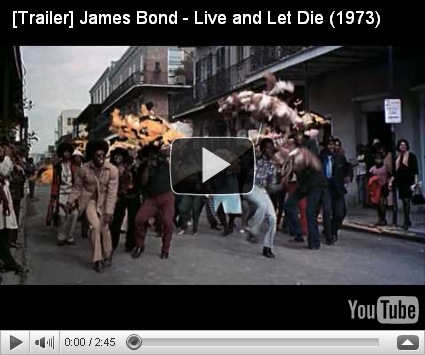
“Live & Let Die” was a James Bond movie starring Roger Moore – in it, he went to a bar called The Fillet of Soul where the Sazerac cocktail was featured.


The Sazerac is widely regarded as the first cocktail. It was invented by Emil Peychaud (of bitters fame) in 1830 New Orleans. An apothecary, Peychaud worked with roots, bark and herbs to create bitters that provide an additional flavor/aromatic profile different from Angostura. The drink contains a rinse of absinthe, which was made legal in the United States relatively recently (2007). If possible, use an atomizer to add the absinthe because it’s there primarily to enhance the aroma with its anise.

“The Nutty Professor” starred Jerry Lewis as Buddy Love, the “Mr. Hyde” of his “Dr. Jekyll & Mr. Hyde” dual roles; some consider the character to be a representation of Lewis’ former partner and Rat Pack member Dean Martin. The movie introduces a fictitious cocktail called The Alaskan Polar Bear Heater; the instructor provided us with the recipe, but was quick to add that when she tried it for some guests once, it was poorly reviewed -- as a result, she does not recommend this one.


A movie titled “Dead Reckoning”, starring Humphrey Bogart and Lizabeth Scott is the definitive film noir style and it seems to favor The Ramos Gin Fizz – something I like to think of as “The Milkshake Of Adult Beverages” due to its combination of egg whites and cream that give it a thick, frothy consistency. One of the problems with making this drink, however, is the fact that it’s labor intensive – you have to shake the mixture a long time in order to make it properly. In fact, the instructor said that the best way to tell if you’ve made it well is by inserting a straw in the middle – if it stands up straight on its own without tipping over, then that means it’s good and thick.


Finally, The White Russian was featured in the cult hit “The Big Lebowski”. In terms of preparation, this, I assure you, was a welcomed respite after breaking a sweat over making the Ramos Gin Fizz. By comparison, this is incredibly simple to make – to say nothing of quick – which almost makes sense as to why the character of The Dude liked it so much. After all, this is something of a slacker’s recipe and Dude was a slacker himself.


Got any other classic movies with classic cocktails? If so, then please be sure to leave a comment to share with the rest of us!

Thursday, April 14, 2011

“The Double Hour” – Movie Review


This week in my movie class, we saw a thriller from Italy titled, “The Double Hour” (“La Doppia Ora”).

Synopsis
 
A couple get victimized in the course of a brutal robbery – but in the aftermath, one of them suspects that they may have been set up by the other.

Story
 
Sonia is a lonely young woman who currently works as a chambermaid at a very upscale hotel in Turin, Italy.  When not keeping in shape by swimming at her gym, she spends her time attending speed-dating sessions in desperate attempts to find a man with whom she can share her life.  Eventually, she meets Guido, a widower who now works as a security guard at a gated mansion.  They seem to hit it off and wind up spending a bit of time with each other after the evening’s speed-dating.  Later, they decide to to go out together – a fateful decision that turns out to be an epic bad first date. 

Taking her to the estate where he stands guard, Guido carelessly disables the electronic security system upon entrance to the property so that he and Sonia can stroll all by themselves through the expansive wooded area behind the property.  Just as things are about to get romantic between the two of them, they are interrupted by a team of robbers who ransack the house and cart off all the ornate furnishings and expensive art into a moving van.  During the course of the robbery, Guido incurs a gunshot wound from one of the robbers; upon the bullet’s exit, it glances off Sonia, grazing her forehead and causing her to go into a coma for several days. 

Despite both of them being injured in the course of the robbery, Guido begins to suspect that Sonia may have been behind the scheme and intentionally implicating him in the crime.  As a direct result of the theft, Guido loses his job and while looking for new employment, he spends an increasing amount of time with Sonia even though he has doubts about what was behind the robbery.  When a police investigation appears to confirm Guido’s worst fears, will he turn in Sonia unless she can prove her innocence? 

Review

This is a movie that’s tough to describe in part because it’s a bit difficult to follow and also because any description might include spoilers, either intentionally or not.  One thing I feel that’s incumbent upon me to tell you upfront – only because some folks find this an issue when it comes to seeing foreign films such as this one – is the fact that the movie has subtitles.  In all honesty, I don’t mind subtitles in a movie, but if you as a filmmaker are going to use subtitles, then either do it right or don’t do it at all.  Unfortunately, this movie does not do it right – the subtitles are in white lettering which frequently makes them difficult to read during the all too brief periods of time when they appear on screen while up against light colored backgrounds.  The far better choice – something which disappoints me when filmmakers don’t do this – is to use the color yellow for the lettering because the subtitles can be easily read regardless of whether or not they are put up against a dark or light background. 

Enough about the subtitles, back to the movie itself.  The actual story is honestly a pretty clever idea, but maybe a little too clever because it’s difficult to pull off and still keep a coherent film that people can follow without it being overly demanding on the audience.  Our instructor pointed out that one of the goals of a thriller is to keep the audience off balance -- “Double Hour” accomplished this task, but maybe a little too well for my taste because by the time of the movie’s big reveal – which ends the second act – I’ve invested so much time trying to follow what originally appeared to be the main story that I came away confused and angry that I was forced to watch the “wrong” story.  Add to this that the ending was a little unsatisfying – especially given what we were set up for – that I felt the movie was something of a letdown.  As a result, I can’t really recommend going to see this in the theater, however, it would probably be better off as a rental, provided you wanted to go back and watch it a second time to really figure it out by seeing what you missed on the first view.

While there was no one from the movie to be interviewed either before or after the screening, we did, however get treated to an interview with show business icon Shirley MacLaine prior to viewing the movie; you may have seen her on TV recently as she has been making the usual TV talk show rounds in order to promote her new book, I’m Over All That, her twelfth.  Although she talked extensively about her metaphysical beliefs, what I found most interesting in her interview were the stories she told about working with such movie legends as Alfred Hitchcock and Peter Sellers.  She worked with Hitchcock on “The Trouble With Harry” and found him to be difficult to understand because he give much of his direction in a type of Cockney slang (e.g., “Genuine Chopper” meant “Relax” and “Dog’s Feet” meant “Pause”).  MacLaine co-starred with Sellers in “Being There” and she said that he spent much of the shoot convincing himself – and others, apparently – that he and MacLaine were engaged in a torrid love affair, although she claims that it was completely untrue because he was not her type.