Saturday, November 23, 2013

“Weekend Of A Champion” – Movie Review


WkdChamp

This weekend, I attended the Film Society of Lincoln Center’s opening night for the re-release of the 1972 documentary “Weekend Of A Champion”, featuring race car driver Jackie Stewart and filmmaker Roman Polanski. 

Synopsis

Filmmaker and car racing fan Roman Polanski spends a weekend with his friend and race car driver Jackie Stewart as he prepares for the Monte Carlo Grand Prix in 1971.

Story

On a rainy Thursday in May of 1971, filmmaker Roman Polanski and his close friend, champion race car driver Jackie Stewart, check-in to their Monte Carlo hotel.  Besieged by fans seeking autographs and snapshots, Stewart is amiable but distant as his mind is on the race in which he will compete this weekend.  Although he is accompanied by his wife, they do not have an opportunity to spend too much time together as city officials and sponsors of the race expect him to attend various ceremonies.  Understanding that this is part of the price he must be for his success, Stewart obliges them. 

Stewart takes Polanski on a drive through the route of the race, which takes place on the city’s streets.  Stewart points out the various risks and hazards along the way, explaining the manner in which he must drive by those spots to avoid an accident causing him to lose the race – or worse, lose his life.   Pointing out that the weather forecast for the day of the race is not too promising, he has to keep the possibility of hydroplaning in mind.  On top of all of this, he must work carefully with his mechanics, who have to customize his car not only for his driving style but also to optimize it for the route and weather. 

After Stewart is seen winning the race, the last portion of the documentary flashes forward 40 years and shows him with Polanski in the present day; they are watching the film in the same hotel room where Stewart originally stayed.  They reminisce about their friendship and the period when the movie was shot; Stewart says he is most proud of the his efforts to add safety measures to racing, which has resulted in a dramatic decrease in driver deaths.  Perhaps the most surprising part of their conversation is where Stewart admits that he is a dyslexic and to this day, cannot read, write or recite the alphabet. 

Review

I did not attend this screening because I am a racing fan.  As a matter of fact, I’m not even a car guy.  The reason why I was interested in seeing “Weekend Of A Champion” was out of curiosity:  Polanski and Stewart seemed so incongruous to me, I thought you might as well cast them in a remake of Neil Simon’s “The Odd Couple”.  Much to my astonishment, it turned out that not only was Polanski a big fan of racing, but also has maintained a close friendship with Stewart for the past several decades.  The other amazement was how fascinating the film was, even for someone such as myself, who doesn’t claim much knowledge of the sport. 

The only criticism is that the present-day discussion between these two men in their later years was not integrated into the movie more; instead, it appears as an after-thought.  Arguably, a better use of this footage would be to edit the movie in such a way as to intersperse the conversation and observations of these two giants throughout the motion picture.  As it currently exists, “Weekend Of A Champion” suggests something of a false ending when we see the victorious Stewart at the conclusion of the race; in placing the updated footage afterwards, it is almost trivialized . 

An interview with filmmaker Brett Ratner followed the screening.  Ratner’s involvement with the documentary is as a facilitator of its distribution. The story behind this – and the inception of its re-release – is  this:  when the movie originally came out, it was not distributed in the United States; it was only seen in a small handful of theaters in Europe.  When the lab processing the print went out of business, they contacted Polanski and asked him if they should destroy it; instead, Polanski insisted they send it to him.  After seeing it again, he was inspired to shoot the additional footage with his friend Stewart.  Once Ratner saw this version, he knew he had to help get the motion picture seen in this country.  “Weekend Of A Champion” is having an extremely limited release, having opened just this past weekend; if you are not fortunate enough to be in New York or one of the few cities where it is playing, then do be sure to look for it soon on Netflix; according to Ratner, it should be turning up there in the not too distant future.   

Weekend of a Champion (1972) on IMDb 7.3/1084 votes


“Lone Survivor” – Movie Review


lone_survivor_poster

This week, I had a chance to attend a Universal Pictures’ advance screening of their new action drama, “Lone Survivor”, based on the best-selling book; the film stars Mark Wahlberg & Eric Bana and is written & directed by Peter Berg.

Synopsis

When Navy SEALs sent to take out a Taliban leader are discovered before they can complete their mission, can they escape or will they be caught by the enemy?

Story

In 2005, Lt. Cmdr. Erik S. Kristensen (Bana) sends a team of Navy SEALs on a secret mission in Afghanistan to kill a Taliban leader who himself is responsible for the death of United States Marines. Once in the region where their target is located, they spot him and report his whereabouts to headquarters. Shortly thereafter, they are discovered by a group of goat herders, whom they hold hostage. Following much debate on how to handle them, the SEALs decide that proper rules of engagement in war dictate it is best to let them go to return to their village.

Once the hostages are released, one of them informs the Taliban leader of the SEALs’ location. As the SEALs retreat, they try to contact headquarters to arrange for their pick-up, but technical problems prevent this communication from occurring. During this time, a group of Taliban soldiers surrounds them and an extended firefight ensues shortly thereafter. Although the SEALs are able to successfully dispatch quite a few of the Taliban attackers, it is not without a cost – most of them are seriously wounded, their equipment is lost or badly damaged and some lose their rifles in the chaotic battle.

By the end of the gunfight, all of the SEALs have been killed except for one: Marcus Luttrell (Wahlberg). Though injured, Luttrell evades his attackers and is rescued by an Afghani man from another village; the man, who does not belong to the Taliban, takes the obviously distressed Luttrell back to his village to care for him and hide him from the Taliban. When the Taliban visit the village and find Luttrell, the man and his neighbors are able to successfully fight them off and once again save Luttrell’s life. But how long can they keep the Taliban from capturing Luttrell and will he ever return safely to his base?

Review

Here’s my dilemma: since “Lone Survivor” is based on a book which itself is based on a true story lived by people far tougher and braver than I, it is difficult to come down too hard on the movie without looking like someone who is wholly unsupportive of the military. On the other hand, if I don’t state my issues with the movie, I’m not being honest. So, let’s just put it this way: taking the film out of its context, I suppose “Lone Survivor” works well enough as an action/adventure picture – buy your ticket, get your popcorn and turn off your brain. Just as long as you don’t question anything, it’s all good.

As a tribute to all of the heroes that personally experienced this horror, however, it seems a bit lacking. First, let’s consider this as only a movie: with a title like “Lone Survivor”, aren’t you tipping off not only the story itself but also its ending as well? My understanding was that this was used because it was also the title of the book on which it was based – but even if that’s the case, there have been plenty of adaptations that don’t use the same title as its source material. Also, if the end hasn’t already been sufficiently tipped off in its title, it’s reinforced by opening with the resolution so you’ll know the ending – then, it proceeds to tell the whole story through flashback. I guess if you title a motion picture “Lone Survivor” and put Mark Wahlberg in it, you can pretty much guess who the Lone Survivor is going to be without even seeing the flick, no?

Following the screening, there was an interview with writer/director Peter Berg and the real Marcus Luttrell, who was portrayed by Mark Wahlberg. Luttrell said that when initially approached, he was reluctant to participate in the adaptation; once a movie executive said they were going to proceed regardless of whether or not he was on board, he decided to join just to make sure that scenes were shot as accurately as possible. Berg became inspired to get involved after reading the book; he was given a copy while  shooting another film and didn’t feel he could devote time to read it then. After being urged to read it immediately, he realized right away that this had to be his next film.


Lone Survivor (2013) on IMDb 7.1/10470 votes


Wednesday, November 20, 2013

The Guardians’ Chapter From The Glenlivet


GlenlivetChExp

If you’ve been following this blog over the past few years, you may recall that as a member of The Glenlivet Guardians, I’ve been invited to a number of unique scotch tastings held by The Glenlivet. Recently, they conducted another such tasting – attendees being limited to Glenlivet Guardians who had participated in previous events. What made this one stand out is the fact that we, as members of the local Guardians Chapter, would participate in the selection of the next expression to be released by The Glenlivet. All around the world, Glenlivet Guardian Chapters have been summoned to tastings where they would try three very different types of scotches recently made by the company and vote for which one they think should be the pick to become the product to be released by The Glenlivet in the autumn of 2014.  Since it was picked by members of The Guardians, it would be known as The Guardians’ Chapter. 

The samples were presented to us under three different categories: Classic, Revival and Exotic. Unfortunately, we weren’t given a substantial amount of background about any of these; that is partly because they didn’t want too much information to influence our voting in any way. That said, just by looking at each dram, you could likely infer that they were aged differently: the Classic was the lightest color and the Exotic the darkest. Since the degree of a whisky’s coloration typically depends on the amount of time it spends in the cask, a reasonable deduction was that the Exotic version was probably aged the longest. But only the whisky-maker knows for sure. And they’re not telling. Yet.

Program

Each one of these offerings was distinct: Classic sweet while Revival relies more on fruity notes and Exotic was spicy. Craig Bridger, Brand Ambassador for The Glenlivet, guided us through the tasting, but for the most part, we were on our own – again, the purpose here was to get an unbiased opinion from members of the chapter. He suggested that we try each one with a drop or two of water after tasting them on their own; unfortunately, this was not always possible for various reasons, so I mostly tried each whisky by itself. As I wandered from table to table to obtain each dram, I nosed each glass carefully prior to sipping; I tried to imagine scenarios under which each one would be best utilized. Would one be best as an aperitif? Or would it be best featured post-meal? Is this a whisky I’d rather use as the base spirit of a cocktail or is it better to drink it on its own?

In coloration, nose and taste, the Classic was very light; it was a stark contrast against the Exotic, which was dark in color and smoky on the nose. The Exotic, yielding a taste somewhat reminiscent of rye, also contained a hint of chocolate. One of the reasons for the complexity of the Exotic, I was to learn, was due to the fact that it was aged in a sherry cask. Ultimately, my vote went to the Exotic. Part of my reasoning for this had to do with the marketing: since we were told that the new expression would be released in the fall of 2014, this one seemed to be most appropriate for that season. While both the Classic and Revival were quite good, they seemed to me to be best suited for a springtime release; I could envision myself enjoying those during the warmer months, then switching to the Exotic as the temperatures dropped.

Ballot

Thursday, November 14, 2013

“Sunlight Jr.” – Movie Review


sunlight-jr 

This week in my movie class, we saw the drama “Sunlight Jr.”, starring Naomi Watts & Matt Dillon.

Synopsis

When a poor couple learns they’re expecting a baby, will they be able to support the child or will the stress ultimately drive them apart?

Story

Melissa (Watts) and Richie (Dillon) are barely able to scrape by. Between her job as a cashier at Sunlight Jr., a Florida convenience store, and the disability checks Richie gets due to becoming a paraplegic following an accident working at his construction job, they get creative for survival. While Melissa brings home discarded food from the store, Richie spends his time and money drinking, either alone or with friends, at the motel where the couple resides. Despite her steady job, Melissa finds work difficult because of an obnoxious boss and an ex-boyfriend, Justin (Norman Reedus), stalking her there and trying to lure her back to the drug abuse from which she is determined to recover.

Good news finds its way to the couple when Melissa discovers she’s pregnant. With the prospect of parenthood in their future, this happy couple is delighted they can finally start a family. But around this time, Melissa gets a shift change at her job and must now work overnights instead of the daytime period she’s been on for the past eight months. Reluctantly, she tries to work these hours, but after quickly proving unreliable in the new time slot, she is immediately fired. With no job and prospects of work severely limited for Richie due to both his disability and limited skills, they are evicted from the motel.

Forced to move in with Melissa’s alcoholic mother (Tess Harper), the couple’s stress level rapidly increases. Fighting continuously due to a lack of privacy and money, Richie can’t take it any longer, so he leaves Melissa in the middle of the night. Now alone, Melissa questions whether or not she could raise the baby by herself. Even with Richie, could the two properly care for an infant with both of them unemployed? Scared and desperate, Melissa concludes she must get an abortion. Lacking funds, she begs Justin for money for the procedure. But will Melissa go through with this even if Richie returns?

Review

Remember that 47% of United States citizens Mitt Romney referred to during his presidential campaign last year? Well, you might be glad to know that a bunch of them wound up here in “Sunlight Jr.”. This depressing story is more sober than any of its characters as it details a slice of life from a couple that appears to be doomed to poverty for the remainder of their life, either together or separately. While the film might suggest that the poor are by definition pitiable and deserving of public assistance due to the economic system in which we live, it fails to acknowledge that these specific characters are also victims of their own reprehensible behavior and ill-advised life choices.

Laurie Collyer, who directed her own script, has presented us with lead characters for whom audiences may find it an overwhelming challenge to root. Exactly what admirable qualities do Richie and Melissa possess? Why would reasonable people get behind them emotionally and hope they succeed? However Richie became disabled, he decides that the only way he can deal with it is to drink himself into oblivion. Melissa, a woman with clearly limited and unmarketable skill set, ignores how lucky she is to even have a job in the first place and wastes an excellent opportunity to dig herself, her unborn baby and her partner out of an incredibly deep hole. It is only when she takes an action near the end of the film that she shows any capability of making a mature, responsible decision.

Prior to the screening, our instructor interviewed actress Shirley MacLaine, promoting her new book, “What If?”. While I’d like to be able to summarize her comments on the book, I have to admit that whenever this woman gets into her cosmological and epistemological musings, I do seem to have a distinct tendency to zone out altogether. Instead, what I will focus on is her conversation about the PBS darling, “Downton Abbey”. She said that although she watches PBS, it is mostly for the news; as a result, she was unfamiliar with this particular television show when originally sent the script. Although she was eager to work on something from that time period set in England with elaborate costumes and sets, her primary interest in taking the job was to work with her old friend Maggie Smith, whom she says she has known for over 40 years.

What If . . .: A Lifetime of Questions, Speculations, Reasonable Guesses, and a Few Things I Know for Sure: Shirley MacLaine: 9781476728605: Books


  Sunlight Jr. (2013) on IMDb 5.8/10418 votes

Thursday, November 07, 2013

“Go For Sisters” – Movie Review


Go-For-Sisters 

This week in my movie class, we saw the drama “Go For Sisters”, starring Edward James Olmos and written & directed by John Sayles.

Synopsis

When a woman learns her son has been kidnapped, can she rescue him before he’s murdered by his abductors?

Story

As a seasoned Parole Officer, Bernice (LisaGay Hamilton) has pretty much heard it all from her clients and reliably detects whether she’s being lied to. One day, Bernice’s job requires her to cross paths with Fontayne (Yolonda Ross), a former high school friend turned ex-con who is confronted by Bernice for possibly having committed a parole violation. Fontayne convinces Bernice that she is desperately trying to turn her life around and that she can’t return to prison for fear that this would cause her to fall further down the slippery slope of recovery. When Bernice chooses to give her a second chance, Fontayne gratefully vows to someday return the favor, should the opportunity ever arise.

For some time, Bernice has been estranged from her son Rodney ever since he returned from a stint in the military. After unsuccessful attempts to reach out to him, she finds out that her son’s whereabouts are currently unknown; digging a little deeper, Bernice gets information that Rodney has been kidnapped by traffickers who smuggle people across the border between California and Mexico. Seeing that she needs help, Bernice enlists the aid of Fontayne, who continues to have many contacts on the street. Through a fellow former prison inmate of Fontayne’s, she and Bernice are introduced to Suarez (Olmos), a retired police detective whom Bernice hires to assist her in tracking down Rodney.

Making their way to Tijuana, each team member works on their own to uncover a trail they hope will ultimately lead them to Rodney. Doing so has its challenges, as they stumble across Mexican crime, complicated by the city’s corrupt police officers. Additionally, Suarez – who took the case only because he needed the money after forfeiting his police pension under some sketchy circumstances – is further debilitated by both his age and illness; add to that the language barrier Bernice and Fontayne have difficulties overcoming with many of the locals and chances of successfully locating Rodney alive grow increasingly dim. Ultimately, can Suarez’s law enforcement experience prove the key to unlocking the mystery behind Rodney’s disappearance?

Review

In the last several decades of Director John Sayles’s oeuvre, he has (rightly or wrongly) gained something of a reputation as a filmmaker whose stories focus more on character than on plot. Whether you see this as an observation or a criticism depends on whether or not you’re a fan of Sayles’ work. As far as “Go For Sisters” is concerned, I believe it hinders the movie considerably. Basically, “Go For Sisters” more or less follows the formula of the buddy road movie (as does “Nebraska”, recently reviewed here), but if you’re following the story (or trying to), it starts feeling extremely familiar – and not necessarily in a good way. You’ll feel you’ve seen the movie before and become anxious for the subsequent scenes which you know are coming eventually; even though “Go For Sisters” is only two hours, you may find yourself squirming with impatience.

On the other hand, a true Sayles fan who enjoys his movies for the social consciousness and character-focused tales will likely appreciate “Go For Sisters” (and boy, do I have a problem with that title … but that may be a rant for another day … ). That said, I believe only those Sayles fans will be including this film on a list of his best works. Yes, he does a good job of filling in some of the background of the major characters in tiny smears here and there, but a large degree of frustration can develop if you’re trying to trace the details of the story, especially if you can’t tolerate suspending your disbelief terribly far.

After the screening, our instructor interviewed Sayles and cast members Olmos and Yolonda Ross. Sayles remarked that “Go For Sisters” was a rather quick shoot which took less than four weeks – what complicated it was that there was a mind-numbing 65 different sets in that short period of time. Olmos also gets a Producer credit on this movie; he said that although he was initially brought in for that job only, Sayles offered him the role of Suarez after reading the script. The actor also went into great detail discussing the fact that his character suffered from macular degeneration and how his research on this enervating vision problem informed his performance.

  Go for Sisters (2013) on IMDb 6.0/1031 votes


Sunday, November 03, 2013

WhiskyFest Weekend NYC 2013


WfW1

This year, it was a pleasure to attend another WhiskyFest Weekend here in New York City without a portentous super-storm looming in the background, unlike last year.  Here’s a summary of some of the highlights I experienced in the 2013 celebration of the brown spirit. 

FRI Kicking things off was Johnnie Walker Platinum, which will reportedly sell for $110 per bottle.  Aged 18 years, this new expression is peatier than Gold or Blue but not as peaty as Black – it was described to me as a combination of the Gold and Blue and is best tried with a drop of water. 

JWProducts1

Bowmore introduced The Devil’s Cask, aged 10 years in only sherry casks; scheduled to be available in the United States in January of 2014, aging in the sherry cask imparts heavy fruit notes, especially raisin and berry. 

Bowmore1

Another favorite from the Islay region of Scotland is Laphroaig, who brought Cairdeas.  Relatively new to the market, it is finished for six months in a port cask and retails for approximately $75; although it has been in the American market since earlier in the year, it has a tendency to sell out rather quickly.  So, if you are lucky enough to see a bottle in your favorite liquor store, please do make sure you grab at least one because it may not be on the shelf by the time your next visit rolls around. 

Cairdeas

SAT

A curious product was introduced by Japan’s Suntory – The Hakushu Heavily Peated.  Expected to be available in this country by the end of 2013, what’s remarkable about it is the fact that they actually import their peat from Scotland!  Brought in from both Islay and the Highlands, it is aged between 10 to 15 years and is sampled best with a drop or two of water.

HakushuHeavilyPeated2

Finally, Jack Daniel’s has given us a couple of interesting new products.  First, there’s the Winter Jack Tennessee Cider.  At only 30 proof, this is technically a liqueur – and it surely tastes like one, given its sweetness.  Winter Jack is aged in apple cider casks before bottling, thus providing the flavor of cider.  In serving this one to attendees, they heated it up a bit, which, I’m told, is the preferred way to sip.  Even with relatively mild temperatures on this evening, I could easily imagine how this would warm you up on the coldest of nights. 

WinterJackCider

The way they heated it was by warming up a pot of water, then letting the bottle sit in it for about five minutes or so; while I normally don’t like to drink a liqueur on its own, I must admit that this one was rather tasty, especially when prepared in this manner.  One of the company representatives said that you could also heat it up by placing some of it in a microwave-safe container and nuking it up for a minute or less (depending on how warm you desire).  As you might expect from its name, Winter Jack is a seasonal product, so you’d probably be wasting your time if you try looking for it next summer. 


Their other new product – and this one should be available November 2013 – is Sinatra Select.  Admittedly, as a bit of a Sinatra aficionado myself, I’ve clearly saved my favorite for last here. 

JDSinatra1

You may already know about Sinatra’s affinity for this fine spirit; this 90 proof offering is done to celebrate the relationship Jack Daniel’s had with Old Blue Eyes, who helped bring the whiskey to national prominence, calling it “The Nectar Of The Gods”.  Sinatra considered Jack Daniel’s to be his exclusive brand and legend has it that he was even buried with a bottle of it at the time of his death.  Sinatra Select is aged in unique casks – they contain grooves in the wood specially designed so that the spirit will interact more with the wood during the aging process, which can last anywhere from four to six years.    This causes the whiskey to deeply soak in the wood in order to have it inhabit the flavor profile, providing it with a rich character, creamy in its texture. 

JDSinatraWood

Thursday, October 31, 2013

“Reaching For The Moon” – Movie Review


Reaching4Moon

This week in my movie class, we saw the Brazilian drama, “Reaching For The Moon”, directed by Bruno Barreto (“Dona Flor And Her Two Husbands”) and based on the life of the American poet Elizabeth Bishop.

Synopsis

When a woman has a relationship with her college friend’s partner, will the three be able to maintain their unconventional lifestyle together or will it ruin the friendship for all?

Story

In the autumn of 1951, poet Elizabeth Bishop (Miranda Otto) confided in her writer friend Robert Lowell (Treat Williams) that in order to spark her creativity, she would sail from New York City to Rio de Janeiro, Brazil.  While there, she would briefly visit Mary (Tracy Middendorf), her old college friend, who now lives there with her partner Lota (Glória Pires), a brilliant and successful Brazilian architect. Upon her arrival at their sprawling estate, Elizabeth immediately gets on Lota’s nerves due to her admittedly quirky behavior. Despite Mary’s urgings for patience, Lota grows increasingly belligerent towards Elizabeth.

Feeling awkward and not wanting to further inconvenience her old friend, Elizabeth announces a premature departure, but is quickly convinced to remain. As Lota slowly gets to know Elizabeth, she suddenly finds that she is now attracted to her; Lota lets her feelings known to Elizabeth, who has by now developed a similar attraction. Lota proposes that Elizabeth stay, moving in with her and Mary and cancelling the remainder of her trip. Elizabeth consents, albeit reluctantly, as she doesn’t want to hurt her long-time pal. Upon learning that she is about to become part of a threesome, Mary threatens to leave; Lota bribes her into staying by allowing her to adopt the baby she’s craved.

Initially, Elizabeth and Lota share a rather passionate physical relationship while Mary is squeezed out of the picture altogether; Elizabeth focused on her writing, Lota on her architecting career and Mary doted on her infant daughter. As time passed, Elizabeth and Lota gradually grow apart – Lota being turned off to Elizabeth’s alcoholism and Elizabeth resenting Lota’s ambition. Lota’s career advancement was fueled partly by the potential power gained through her political connections and partly by the pseudo-celebrity status enjoyed by her association with Elizabeth, a recent Pulitzer Prize winner. Would these differences eventually drive them apart or could they rekindle their romance?

Review

If you’ve already seen “Blue Is The Warmest Color” and haven’t quite had your lust for Sapphic cinema sated, then “Reaching For The Moon” may be right up your alley. While I have only heard about the scenes in “Blue” (I haven’t yet seen the movie), it should be noted that the scenes in “Reaching” are probably not quite as long or explicit as I am led to understand similar ones in “Blue” are alleged to be. So, depending on your own prurience, you may or may not find the scenes in “Reaching” to be titillating – my own personal caveat here is the standard, “Your mileage may vary”. Just sayin’ …

That said, there are other, more substantial comparisons that can be made between these two recent films. For one thing, the fact that this is a lesbian affair soon melts away as we can see the real issue here may instead be polyamory, which can occur just as easily in straight relationships. The fact that the individuals in question are lesbian quickly becomes irrelevant; rather, we focus on attributes common to intimate relationships of all types – jealousy, ego, selfishness, thoughtlessness, insecurity … the list goes on. The fact that the story’s characters are intelligent, articulate and well educated (not to mention somewhat famous and thus based on actual people and incidents) makes this complex romantic triangle even more intriguing. “Reaching For The Moon” is fascinating to behold both in terms of the way its story is told and the visual imagery used throughout by its director.

Following the screening, our instructor interviewed “Reaching For The Moon” director Bruno Barreto. Barreto said that the original idea for the movie came in the late 1990’s when his mother gave him a book about Elizabeth Bishop; one of the reasons why it took so long for him to make the film was his struggle with how to make Bishop a sympathetic character, especially in light of the fact that this really seemed to be Lota’s story – one that would be most easily told from her perspective. Another reason for the delay was the amount of research; Barreto learned a good deal about the relationships by reading a book containing letters between Bishop and Lowell. The theme of loss runs through much of Bishop’s work and Barreto maintained it was imperative for him to have that theme to run throughout his film as well.

 Reaching for the Moon (2013) on IMDb 7.3/10290 votes

Sunday, October 27, 2013

“Casting By” – Movie Review


casting-by

This weekend in my movie class, we had a bonus screening of “Casting By”, a documentary about Casting Director Marion Dougherty.

Synopsis

What do Casting Directors do?  How has their role has changed over the years?   Pioneering Casting Director Marion Dougherty answers these questions and explains how she single-handedly redefined the profession. 

Story

Marion Dougherty is famous in the entertainment industry as someone who spent half a century as a Casting Director for a wide array of television shows and theatrical motion pictures.  In college, she wanted to become an actress but was discouraged when she learned how difficult it was to obtain work.  After graduation in the 1950’s, Dougherty went to New York City to break into show business in some form, but wound up taking a subsistence job as a window dresser for a major department store.  Shortly thereafter, she was contacted by an old college friend who did casting for NBC’s Kraft Television Theater; he hired her as his assistant and when he left the position a few months later, Dougherty took over and her career as a casting director was well on its way.

In the old days of the studio system, the role of the casting director was very different from what it has evolved into today.  Then, actors were signed to a long term contract with each movie studio and were required to fulfill their contractual obligations by performing in a specified number of movies each year; as such, the casting director was regarded as little more than a secretary – their job was to match up an actor from one category with an actress in another category to cast them in a film about to go into production in yet another category. 

By the early 1960’s, however, the old studio system gradually began to collapse and eventually fell by the wayside.  While many saw this as a plus, one of the disadvantages was that actors were no longer guaranteed work because they were now essentially free agents.  That’s when Dougherty came into her own and figured out how the role of a casting director would fit into this new system.  She effectively became a collaborator with a director, suggesting actors and actresses they might not necessarily have considered – instead of looking for a pretty face, she looked for acting skills.  But could Dougherty maintain her grasp on being a Casting Director even after major corporations took control of the motion picture studios?

Review

“Casting By” is a must-see documentary for anyone who considers him/herself a big fan of television and movies.  For people unfamiliar with behind-the-scenes nuts and bolts of how productions are assembled, this film provides a crystal clear understanding of exactly what happens during the casting process and how.  You will come away from it being both informed and entertained.  The talking heads – a necessary evil of almost all documentaries – are interspersed with filmed auditions of major stars, such as Jon Voight as well as early performances by young, then-unknown actors like Robert Duvall. 

One of the things to be learned in “Casting By” is the prejudice experienced by Casting Directors from others in the industry – including and especially The Directors’ Guild Of America (DGA).  While it may not be well known to the general public, apparently the DGA has a major thorn in its paw when it comes to giving Casting Directors their due, insisting that their title is incorrect as there can only be one individual with the title “Director” on any given film.  Further, Casting Directors, despite their involvement in the movie-making process, often don’t receive a credit on the film/television show for which they have worked – and when they do, it is buried on a screen with a number of other credits, instead of getting its own title card. 

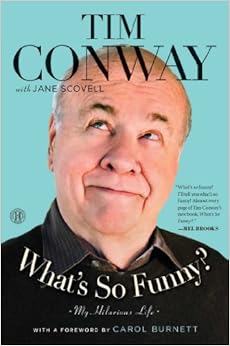
Following the screening, our instructor interviewed comedian Tim Conway, who was promoting his new autobiography, “What’s So Funny?”.  One thing became clear early-on in this conversation:  trying to conduct a serious interview with Conway is about as easy as trying to nail Jell-o to a wall.  Based on his looks and behavior – especially his razor-sharp comedic mind – it is hard to believe that Conway is nearly 80 years old.  In a rare serious moment, Conway confessed that he was dyslexic from childhood and that whenever he had to read aloud in class, the other children would laugh at him because he would either insert or omit words from a sentence.  Seeing how easy it was to get laughs from them inspired him to become a comedian. 


Casting By (2012) on IMDb 6.9/10321 votes6.9/10321 votes

Thursday, October 24, 2013

“Nebraska” – Movie Review


Nebraska

This week in my movie class, we saw the comedy-drama “Nebraska”, directed by Alexander Payne and starring Bruce Dern, Stacy Keach and Bob Odenkirk

Synopsis

When an elderly man heads to Nebraska to collect a prize he mistakenly thinks he’s won, will his family be able to convince him he’s wrong or will he somehow be able to prove he’s right?

Story

On a bitterly cold autumn morning, Woody (Dern) sets out from his humble home in Billings, Montana to get to Lincoln, Nebraska – except he’s making the trip on foot! The reason for this old man’s trek is to collect a one million dollar cash prize he incorrectly believes he has been awarded. When he’s discovered before he could get very far, both of his grown sons – David (Will Forte) and Ross (Odenkirk) – try to painstakingly explain to him that Woody is sadly mistaken. Piling on is his long-time wife Kate (June Squibb), a crusty, mean-spirited hag who isn’t above seasoning her vocabulary with salty language. Undeterred, Woody maintains he is correct, showing them the document he received as proof – actually, a piece of junk mail a marketing company apparently sent out to many others as a way of soliciting magazine subscriptions.

Seeing that Woody will stubbornly stick to the belief that he’s a newly-minted millionaire, David decides that the only way his father will ever come to realize the bitter truth is to actually take him to Lincoln to try to pick up his prize. Taking a few days off from work, David puts Woody into his car and drives him on their excursion to Lincoln. Along the way, they make another stop in Nebraska to visit some relatives in Hawthorne. When Woody lets it slip that he’s just won a million dollars, the news quickly spreads across this small town and soon, both extended family members and former acquaintances are pestering him for money.

David is unsuccessful in persuading everyone to believe that Woody is in error, even when he is joined in Hawthorne by Ross and Kate, who likewise make similar attempts on their own. Complicating matters is Ed (Keach), an ex-business partner of Woody’s, who steadfastly insists that Woody has owed him a considerable amount of money for quite a few years; when David tells him Woody won’t be paying up any time soon, Ed threatens the family in an effort to seek a payday of some sort. After resuming their travel, will David be able to talk Woody into returning to Billings or will Woody wind up being humiliated upon arrival in Lincoln?

Review

Having directed some of my favorite films – namely, “Election”, “Sideways” and “The Descendants” – I greatly looked forward to seeing Alexander Payne’s latest, “Nebraska”, which recently played here at The New York Film Festival (although I missed it then). While devastatingly funny in a number of scenes (particularly those with June Squibb’s portrayal of a crotchety, long-suffering wife), it is probably not going to be ranked among the director’s greatest – although it is quite a good film, make no mistake. Unfortunately, many of its themes feel like retreads of other movies I’ve seen over the years; while it’s quite humorous and the performances are good, “Nebraska” would probably be a borderline recommendation.

Payne’s “Nebraska” touches on aging, parenthood, alcoholism, greed, petty behavior in the flyover states and a number of other subjects, all of which are cleverly intertwined throughout the movie – certainly, a tribute to its director’s storytelling capabilities. And yet it seems like we’ve watched this all before, except for the actors’ near-catatonic countenance when they crack their snarky jokes. The characters are at once both hilarious and pathetic, not unlike the rest of us. But even after David explains his reasons for embarking on this parental road trip, you’re still left a little believe it or understand how he could afford to miss work for several days. Earlier in the motion picture, you either buy into the premise of the journey or you don’t – and if you don’t, then you may quickly fall out of the story itself altogether.

What may not have helped was the fact that “Nebraska” is in black and white; Payne was a little (intentionally?) vague on this particular topic in one interview (here). Maybe it was done to accentuate the drab life its characters inhabit – but a black and white feature is something that might make for a tough sell to audiences outside of the usual art film crowd. If this movie garners nominations for The Golden Globe or The Academy Award, that might help its visibility. The stoic nature of Midwesterners is self-evident in “Nebraska” – but for some, it may be emotion so underplayed that it could be elusive.


Nebraska (2013) on IMDb 7.6/10467 votes


Thursday, October 17, 2013

“Spinning Plates” – Movie Review


spinning_plates

This week in my movie class, we saw “Spinning Plates”, a documentary about the restaurant business.

Synopsis

When three restaurants around the country are followed over the course of a year, will each one succeed despite various challenges or will they be forced to go out of business?

Story

Alinea is a restaurant that is located in Chicago and is widely considered by experts to be among the best in the world. Much of its success is attributed to Grant Achatz, Alinea’s classically-trained chef, who previously worked under Thomas Keller at the legendary French Laundry. Being the creative type who enjoys pushing the envelope and challenging customers who visit this pricey establishment, Grant has mastered what is known as molecular gastronomy – preparing and presenting different types of foods in an extremely non-traditional manner. But will Grant’s health prove an issue as he and the manager attempt to open another restaurant?

Breitbach’s is a family-owned restaurant in the hamlet of Balltown, Iowa. It has been around for a century and a half, having been handed down from one generation to another. This restaurant is always a busy place, especially during the holidays; over the many decades of its existence, it has evolved into more than merely a local business – it is a public house, a town center where members of the community gather during both good times and bad. After a gas fire burns the place to the ground, the citizens of Balltown and surrounding areas take up a collection to restore what they feel is “their” restaurant – but only 10 months after being rebuilt, there is yet another devastating fire that once again destroys Breitbach’s. Can – or will – the family rebuild twice within a year?

La Cocina de Gabby in Tucson, Arizona is literally a mom and pop outfit – Francisco is the manager and his wife Gabby (the restaurant’s namesake) its chef. A poor, hard-working couple, they spend more time at their business than at home – not only do they have family pitching in to help out, they also have to bring their three year old daughter to work every day because they cannot afford the daycare service. But daycare is not all they can’t afford – falling behind in their mortgage payments, the family is in danger of the bank foreclosing on their house. Will Francisco and Gabby be able to turn their business around significantly so they won’t lose their home?

Review

Prior to the screening, our instructor pointed out that one of the challenges with which documentarians are faced is the dramatization of their subject matter.  Since all movies need to have a three-act structure, how do you present a documentary in such a way that it will face a turning point at the end of its second act so you will have a climax to your story at its conclusion? Documentaries that lack this can be a little bland to watch, but they are at least factually accurate and truthful. With documentaries that do have this structure, however, you may never know if the turning point was manufactured to manipulate the truth or if the filmmaker simply got “lucky” (to the detriment of their subjects) and stumbled upon an actual crisis.

In “Spinning Plates”, it appears as though we may possibly be seeing a mix of the two, to one degree or another. With Alinea, the crisis to which we are introduced actually occurred a couple of years in the past – as a result, when we watch the documentary, we are already aware of whether or not the subject has survived (at least, to an extent). Similarly, with the turning point that happens for Breitbach’s, the filmmaker basically telegraphs the ending to the audience before the resolution is reached. For Gabby’s, their climax is not tipped off quite so obviously as the other two restaurants, but it doesn’t take Kreskin to predict how their tale will turn out based on what we’ve seen up to that point.

Another problem I had with this documentary was with how sympathetic some of the characters may or may not have been. The owners of Gabby’s are nice to a fault – they are both kind, sweet, sincere, humble, simple people. But neither one of them appears to have terribly good business acumen. The Breitbach family is proud of the longevity of their legendary restaurant – but if it was located in a larger town with more competition nearby, would it still be just as successful? For me, Grant of Alinea was difficult to root for, even after his health issues are revealed. Yes, he’s a dedicated husband and father and he survived a tough upbringing, but he comes across as so infatuated with himself and the “art” of his food creations (which seem less like meals and more like science projects) that he borders on the obnoxious.  While Gabby’s is concerned with mere survival, Alinea’s obsession is more to do with how many Michelin stars they will earn. 

 Spinning Plates (2012) on IMDb 8.1/1038 votes